what is a belt scale
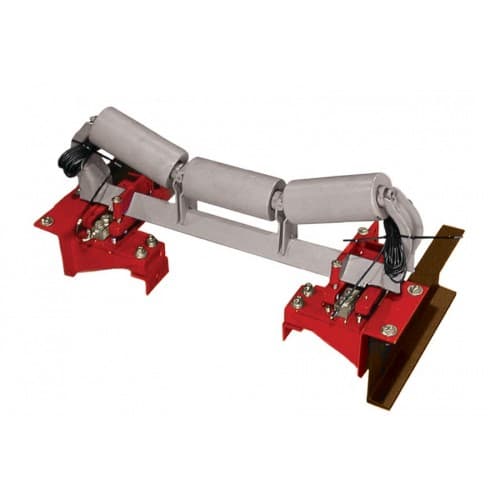
What is a Belt Scale? Belt Scale Weighing Calibration Adjustment
What is a Belt Scale? Belt Scale Weighing Calibration Adjustment
Tuna Belt Scale
WHAT IS A BELT SCALE? HOW DOES IT WORK?
At the forefront of our applications operating in the sector are belt control systems, which we call T-BS Belt Scales. Tuna T-BS Electronic Belt Scales measure the flow weight of the material carried on the conveyor belt. Thanks to their practical installation, they serve as an important data source for businesses while saving labor, time, and capital.
Tuna T-BS Belt Scales consist of an LPR100 Indicator, load cells integrated with a bidirectional speed-reading encoder, and a system control panel. With the ability to connect an external display screen, it provides the opportunity to monitor the amount of material passing over the conveyor belt, instantaneous flow rate, and totals. Instantaneous information can be archived daily, monthly, or at desired time intervals via a PC using the Tuna Belt Scale Tracking Program. The archived information can be analyzed graphically and offers reporting capabilities in Excel format. The Tuna LPR-100 control terminal displays values on the screen as t/h, kg/s, kg/m, m/h, or kg. The weighing calibration process of the belt scale system is adjusted and applied as zero calibration or material calibration.
In order for a belt scale to provide the stated accuracy rates, the following criteria must be met;
ü The error rate may change if the existing conveyor belt is old, spliced, torn, deformed, or subject to vibration. In terms of measurement accuracy, protective measures must be taken by you if necessary to prevent the weighing units from being affected by weather conditions.
ü Existing or potential vibrations in the system shall be prevented. If the condition that the vibration effect is not greater than the allowed minimum error (0.5-1-2%) cannot be met, the weighing platform area must be supported by you with a steel structure.
ü While accuracy remains constant, all measuring systems have a minimum capacity proportional to the maximum capacity, which is 30% for belt scales. For flow values occurring below the minimum capacity, errors greater than the specified error rate may occur.
ü For the system to operate at the given error rates, the material passing through the belt must be fed continuously above the minimum capacity value. In cases where the material does not flow in a continuous regime, is fed intermittently, is transported in lumps, or flows below the minimum capacity value, these error values will not be achievable.
On inclined belt conveyors, the belt angle should not exceed 18-20 degrees. Beyond this angle, material begins to flow backward on the conveyor, which adversely affects the measurement result due to slippage.
ü The given error rates are for dry material. Errors caused by the moisture of the material or water dripping from the belt are outside these error rates. If the material is sticky, the necessary scraper device must be installed by you.
ü Roller center misalignments must be eliminated.
WHAT ARE THE BELT SCALE CATEGORIES?
Tuna Belt Scales are manufactured in 3 categories as T-BS500, T-BS1000, and T-BS2000.
Belt Scale Calibration
Calibration adjustment and application of belt scales is not as laborious a job as thought. Once the installation is completed correctly and once by an expert service, the system is balanced and leveled, and the calibration phase begins. In general, a belt scale;
1- Zero Calibration
It is the calibration performed when there is no material flow.
2- Load Calibration
It is the loaded calibration performed by passing material through.
FIELDS OF APPLICATION
• Cement/Construction
• Chemical/Petrochemical
• Food
• Mining
• Agriculture/Livestock
• In order for a belt scale to provide the specified accuracy rates, the following criteria must be met;
• The error rate may change if the existing conveyor belt is old, spliced, torn, deformed, or in case of vibration. In terms of measurement accuracy, protective equipment must be provided by you if necessary to prevent the weighing units from being affected by weather conditions. Any existing or potential vibration in the system shall be prevented. If the condition that the vibration effect does not exceed the allowed minimum error (%0.5-1-2) cannot be met, the weighing carriage area must be supported by you with a steel structure. Keeping accuracy constant, all measuring systems have a minimum capacity proportional to the maximum capacity, which is 30% for belt scales. For flow values below the minimum capacity, errors greater than the specified error rate may occur. For the system to operate at the specified error rates, the material passing through the belt must be continuously fed above the minimum capacity value. These error values cannot be achieved if the material does not flow in a continuous regime, is fed intermittently, is transported in lumps, or material flows below the minimum capacity value. In inclined belt conveyors, the belt angle must not exceed 18-20 degrees. Beyond this angle, the material starts to flow backward on the conveyor, which negatively affects the measurement result due to rollback. The given error rates are for dry material. Errors caused by material moisture or water dripping from the belt are outside these error rates. If the material is sticky, the necessary scraper device must be installed by you. Idler misalignments must be eliminated.
•
Tags:
belt scale